Calories vs Nutrients: What Should You Focus On?
Learn why both calories and nutrients matter for health, energy, and progress.
2. Calories vs Nutrients: What Should You Focus On?
**Category:** Nutrition Basics
**Slug:** calories-vs-nutrients
**Description:** Learn why both calories and nutrients matter for health, energy, and progress.
**Read time:** 7 min read
Calories vs Nutrients
Calories and nutrients are both important, but they answer different questions.
Calories tell you how much energy food gives you.
Nutrients tell you what your body gets from that food.
For example, a candy bar and a balanced meal may both contain calories, but they do not support your body in the same way. One may give quick energy, while the other may provide protein, fiber, vitamins, minerals, and longer-lasting fullness.
Why Calories Matter
Calories matter because they affect body weight over time.
If your goal is weight loss, weight maintenance, or weight gain, calorie balance is important. It helps you understand whether your food intake matches your body’s needs.
But focusing only on calories can become too narrow. A low-calorie diet is not always a healthy or satisfying diet.
Why Nutrients Matter
Nutrients help your body function well.
Protein supports muscles and fullness.
Carbohydrates provide energy.
Fats support hormones and help absorb certain vitamins.
Fiber supports digestion and fullness.
Vitamins and minerals support many body processes.
A meal with enough nutrients can make it easier to stay consistent because you feel more satisfied.
The Best Approach: Track Both
A useful food tracking habit looks at both calories and food quality.
Instead of asking only, “How many calories did I eat?” you can also ask:
Did I eat enough protein?
Did I include vegetables or fruit?
Did this meal keep me full?
Was this meal easy to repeat?
Did I enjoy it?
This approach is more realistic for daily life.
Calories Are Not “Bad”
Some people think calories are bad, but calories are simply energy. Your body needs energy to live.
The goal is not to avoid calories. The goal is to understand them and choose foods that support your needs.
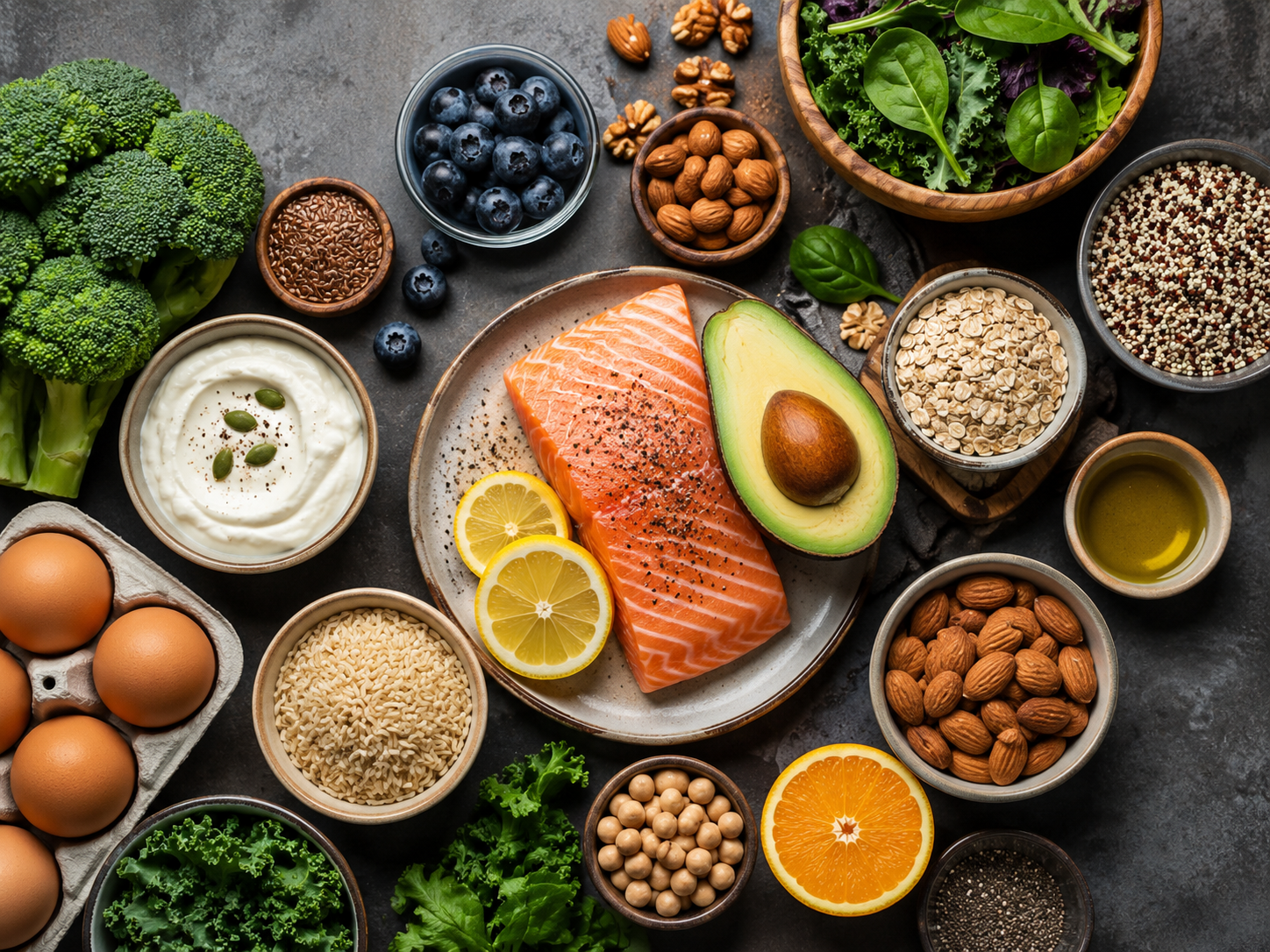
A healthy meal can still be high in calories. For example, salmon, avocado, nuts, and olive oil are nutrient-rich foods, but they can also be calorie-dense.
Nutrient Quality Helps Consistency
If you eat foods that are more filling and balanced, it may be easier to stay close to your calorie target without feeling restricted.
This is why a meal with protein, fiber, and healthy fats often feels more satisfying than a meal made mostly of sugar or refined snacks.
FAQ
Should I track calories or nutrients first?
If you are a beginner, start with simple awareness. Track meals, learn your portions, and slowly look at calories, protein, and overall balance.
Can I lose weight eating unhealthy food?
Weight change depends strongly on calorie balance, but food quality affects hunger, energy, health, and consistency.
Are all calories the same?
For energy balance, calories measure energy. But foods with the same calories can affect fullness, nutrition, and habits differently.
Make meal tracking easier
MyQi Nutrition Tracker helps you log meals with photo input, text input, and daily nutrition insights.
**Download the app**
---
Make meal tracking easier
MyQi Nutrition Tracker helps you log meals with photo input, text input, and daily nutrition insights.
Download the app